

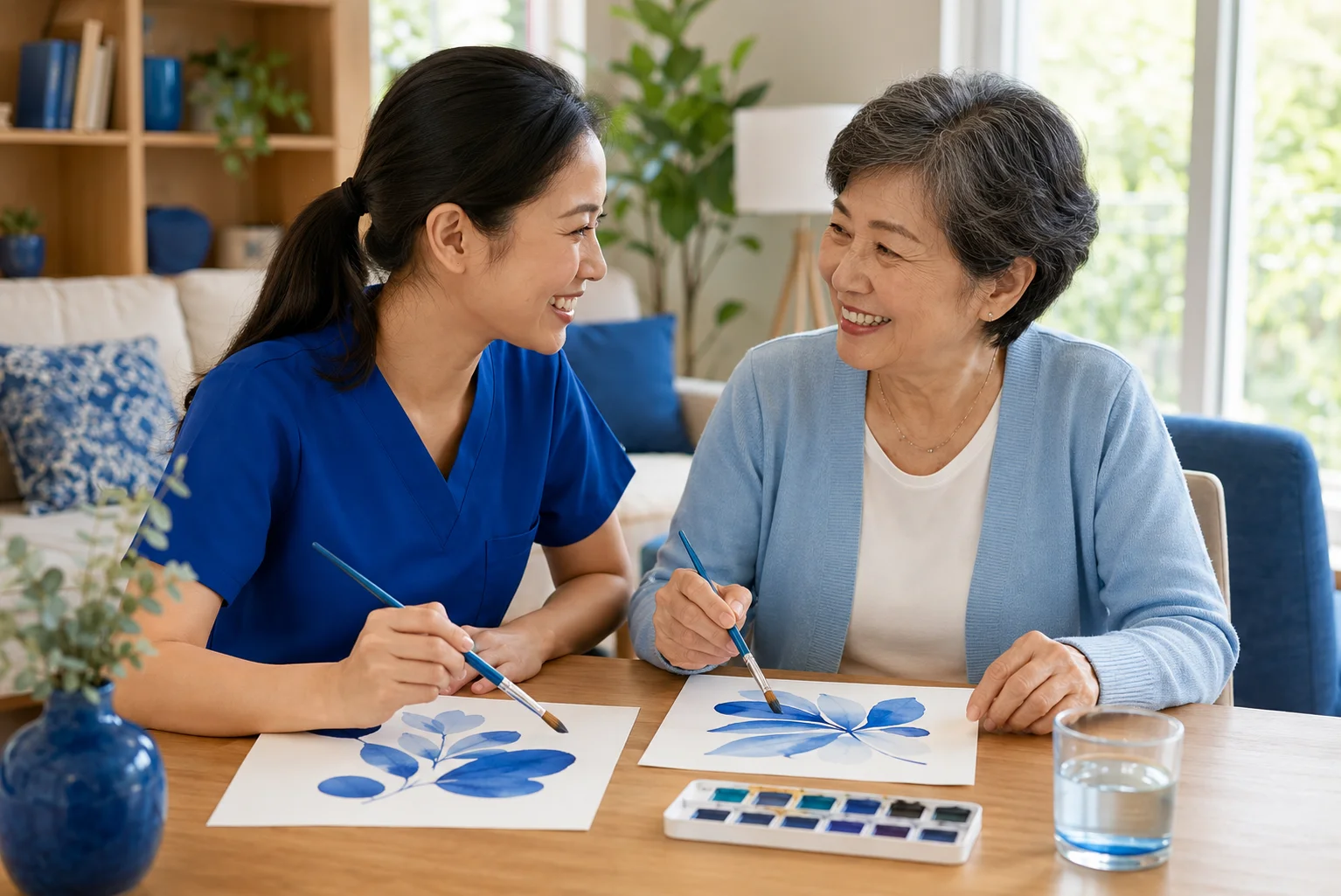
Having a few meaningful habits and hobbies at home can give your loved one more structure, variety, and something enjoyable to look forward to during the day.
Simple activities such as writing, creating, caring for plants, or working on a personal project can be adjusted to fit your loved one’s interests and comfort level. A routine is often easier to maintain when the activity feels familiar, manageable, and worth returning to.
At Global Home Care Services, we understand that daily routines can look different from one person to another. Our care planning considers your loved one’s preferences, current abilities, and the areas where assistance may be helpful.
If everyday tasks are making it harder for your loved one to spend time on familiar interests and activities, you can consider our personal care attendant services for help with parts of the daily routine that now require more assistance.
1. Keep a Short Daily Journal
A short journal can give your loved one a simple activity to return to each day. It can be as brief as a few notes about plans, interests, or something enjoyable that happened.
Your loved one might write down one or two plans for the day, keep a list of books or recipes to try, or record a favorite memory. The activity can be adjusted to whatever feels natural and comfortable.
2. Try a Hands-On Creative Hobby
Creative hobbies can add variety to time spent at home. Coloring, knitting, simple crafts, puzzles, or model projects are a few options your loved one may enjoy.
Start with activities that match existing interests and abilities. Familiar materials and a comfortable workspace can also make it easier for your loved one to return to the hobby regularly.
3. Care for Indoor Plants
Looking after indoor plants can add a small, familiar task to the day. Your loved one might check the soil, water plants, or tend a simple windowsill garden.
Choose plants and containers that are easy to reach and manage. Keeping the activity simple can make it easier to include in the regular routine.
4. Learn Something New
Learning at home can take many forms. Your loved one might read about a favorite subject, try a new recipe, practice a language, or follow an educational program.
The activity should match personal interests and energy level. A short session may be enough if your loved one prefers to learn at a relaxed pace.
5. Work on a Personal Project
A personal project can give your loved one something meaningful to work on over time. Organizing photographs, collecting family recipes, sorting keepsakes, or writing down family stories are practical options.
Your loved one may still enjoy familiar hobbies but have less time or energy for them when everyday tasks begin taking more effort. If dressing, meal preparation, household tasks, or other routines are regularly getting in the way, these may be signs your loved one may need help at home.
If you are noticing broader changes in your loved one’s daily routine, it may help to identify which tasks are becoming harder and which activities your loved one still enjoys doing independently. During a home health care assessment, you can discuss with our team the routines that have changed, the support already available, and where additional help may be useful.
At Global Home Care Services, we use those details to better understand your loved one’s routine and the type of assistance that may fit their current needs.
If changes in your loved one’s daily routine are making it harder to stay involved in activities they enjoy, you can contact us so our team can assist with the parts of the routine where more help may be needed.